
The most common question a Breckenridge buyer asks about a second home is a simple one: how much will it rent for. The honest answer is a range, not a number, and the range is wide. What a home earns depends on its size, its location, how well it's run, and one thing most income projections leave out entirely, whether you can legally rent it at all. Here's the 2026 picture, gross revenue by bedroom count, what moves the number, and the two filters that decide whether you ever see it.
How much does a Breckenridge short-term rental make?
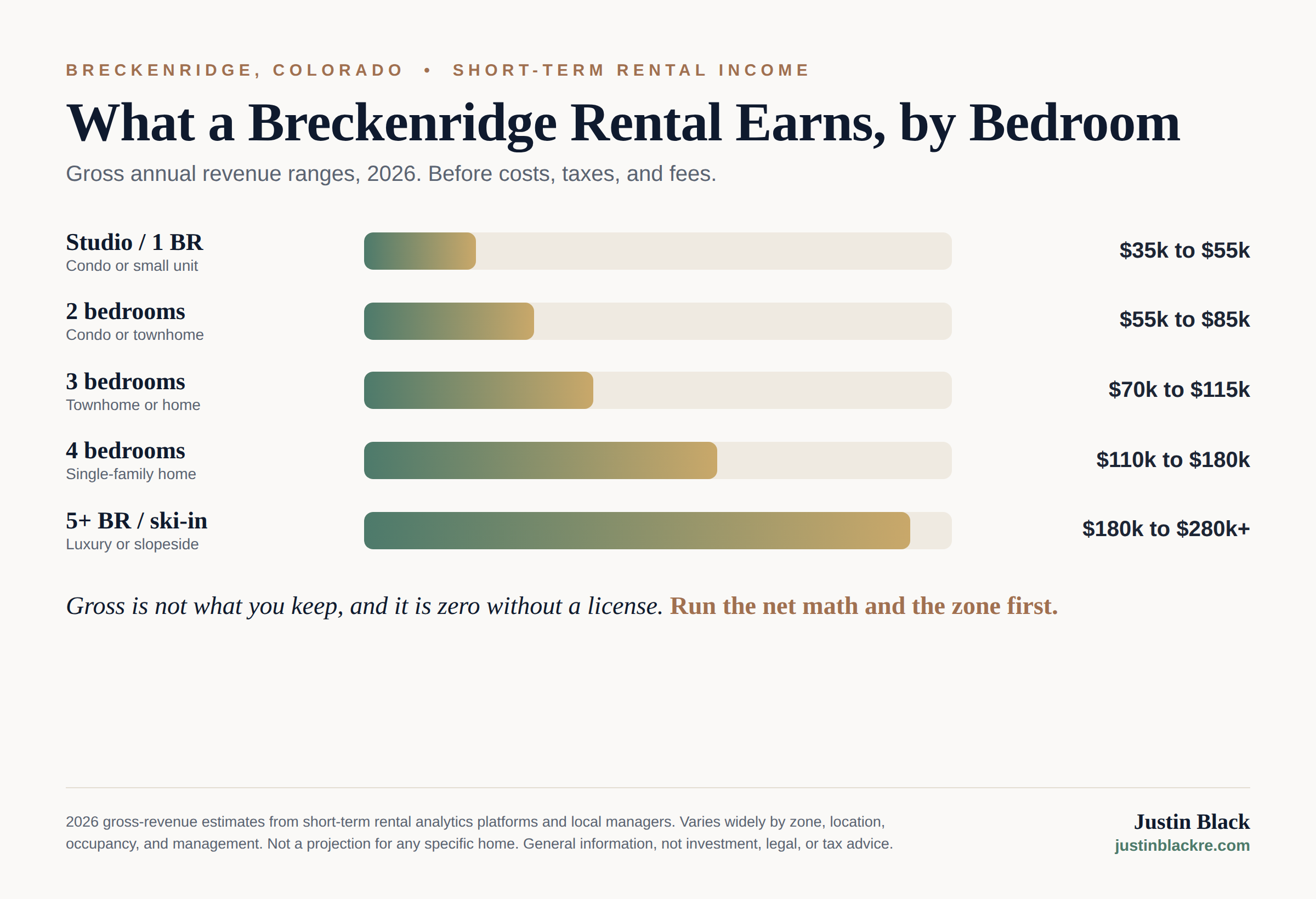
These are 2026 gross-revenue ranges for Breckenridge, drawn from short-term rental analytics platforms and local property managers. Gross means total booking revenue, before management, taxes, fees, and operating costs.
| Bedrooms | Gross annual revenue (2026) |
|---|---|
| Studio or 1 bedroom | About $35,000 to $55,000 |
| 2 bedrooms | About $55,000 to $85,000 |
| 3 bedrooms | About $70,000 to $115,000 |
| 4 bedrooms | About $110,000 to $180,000 |
| 5-plus bedrooms or ski-in ski-out | About $180,000 to $280,000 and up |
The market-wide average lands around $55,000 to $70,000 in gross revenue, on occupancy of roughly 45 to 60 percent and an average daily rate near $400 to $560, with peak ski-week nights running far higher. Treat the ranges as a starting point, not a promise. A specific home can land above or below its bracket depending on everything below.
What actually drives the number?
Sleeping capacity comes first. Nightly rate follows heads in beds, so a home that sleeps twelve earns far more than its square footage alone would suggest, which is why bedroom count and bunk rooms matter more than total size.
Location is second, and in Breckenridge it's decisive. Ski-in ski-out homes and condos at the Peak 7, 8, and 9 base areas, and homes within walking distance of Main Street, command the highest rates and the best occupancy. Move a few miles out and both the rate and the calendar soften.
Then come the operating levers. Occupancy here runs roughly 45 to 60 percent, weighted heavily toward the ski season and a shorter summer peak. The average daily rate sits near $400 to $560 and spikes on holiday weeks. And management matters more than owners expect. Analytics platforms consistently tie professional management to meaningfully higher revenue per available night than self-managed listings, through pricing, minimum-stay strategy, and review quality.
Gross isn't what you keep
Every figure above is gross booking revenue. The number that decides whether a purchase makes sense is what's left after the costs, and in Breckenridge those aren't small. Management typically runs 20 to 35 percent of revenue. The town's regulatory fee is $756 per bedroom per year with no cap, so a four-bedroom carries roughly $3,024 in regulatory fees alone before anything else. Add lodging and sales taxes, cleaning turns, HOA dues, insurance, utilities, and the mortgage, and the gap between gross and net is large. Before you rely on any of these numbers, run the full picture. We do that in the honest math on a Colorado vacation rental, which walks gross revenue down to what actually lands in your account.
The number is zero if you can't get a license
This is the filter that turns a good income projection into a worthless one. Breckenridge caps short-term rental licenses by zone, and the license isn't transferable, so it's surrendered when the property sells and the new owner has to qualify fresh under the current cap and waitlist. In the Resort Zone and Zone 1, that's a quick formality and the income above is achievable. In Zone 3, a home with a strong rental history can convey with no path to a license for years, which means the projected income isn't discounted, it's unavailable. Confirm the zone and the licensing path before you weigh any income number. Our Breckenridge short-term rental zones guide shows which areas you can actually license, and why the license itself is the real asset explains why a conveyable license carries its own price.
How income varies by area
Within the numbers above, the spread is largely geographic. In-town Breckenridge and true ski-in ski-out inventory sit at the top of each bracket. Homes in the outlying Summit County towns, Frisco, Silverthorne, Dillon, and parts of Keystone, generally run lower on both rate and occupancy, and each town carries its own licensing rules that can cap the upside regardless of what a property could earn. If you're comparing across towns, weigh the rules alongside the revenue. Our Summit County short-term rental rules by town lays the jurisdictions side by side.
The bottom line
A Breckenridge short-term rental can be a strong performer, but the gross figure is the least useful number in the conversation. What matters is the net after Breckenridge's real costs, and whether the specific address can be licensed at all. Get those two right and the income takes care of itself. Get either wrong and the best revenue projection in the market is just a number on a page.
If you're shopping Breckenridge with rental income in the plan, I run the zone, the licensing path, and the net math before we ever write an offer. You can start with our current Breckenridge listings.
Short-term rental revenue varies widely by property, location, season, and management, and figures here are 2026 gross estimates, not projections for any specific home or a guarantee of income. Verify current market data and all rules directly before any purchase. This is general information, not investment, legal, or tax advice.